
Hire Slip and Fall Attorney: What to Do After a Fall
Learn what to do after a slip and fall accident, how to preserve useful information, and when speaking with a Florida premises liability attorney may help.
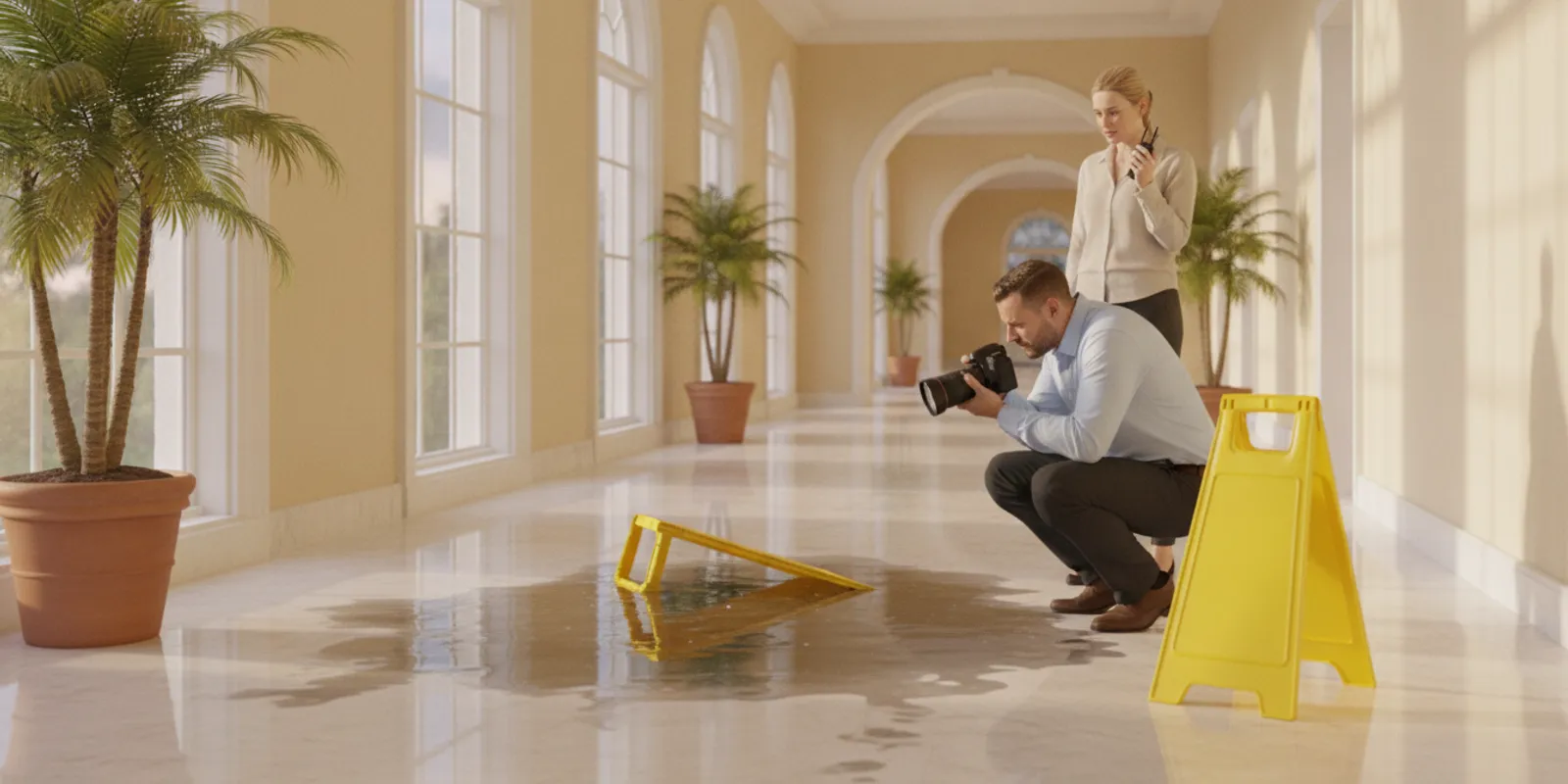
If you have just fallen, focus first on your health and immediate safety. What to do after a slip and fall accident can affect your recovery and how clearly you can later explain what happened. If you are safe to do so, report the incident, preserve information, and avoid guessing about fault.
Request a Free Case Evaluation
What should you do first after a slip and fall?
Move away from an ongoing hazard if you can do so safely. Ask someone nearby for help if you are hurt, dizzy, or unable to stand. Call emergency services for an urgent injury. Do not feel pressured to walk off an injury just to avoid inconveniencing others.
Get medical attention promptly. Some injuries may not be obvious at the scene, and a clinician can assess your condition and recommend care. Describe your symptoms honestly, follow medical instructions, and keep copies of discharge papers, test results, and bills. Do not delay care while trying to collect evidence.
After you are safe, use a brief sequence to keep the next steps manageable:
- Get urgent help for an emergency and arrange appropriate medical evaluation.
- Tell a manager, property representative, or responsible staff member that you fell.
- Record the date, approximate time, exact location, and what you remember.
- Preserve photographs, witness details, and relevant paperwork if available.
- Ask for legal guidance if the injury is serious or you are uncertain about a request or deadline.
This order is flexible. If you need medical help, that comes first. You can ask another person to notify staff or take basic notes while you receive care, but no one should put themselves at risk to document the scene.
How can you document the scene?
If your condition permits, capture details before the area changes. Take photographs or video of the exact place where you fell, the substance or obstacle, lighting, signs, and the surrounding layout. Include a wider view as well as close-ups. If the hazard is no longer there, do not recreate it or touch anything to make a better picture.
Think of the scene as a sequence rather than a single close-up. A photograph of a spill may show its appearance, while a wider image may show its position in an aisle, near a doorway, or next to a warning sign. If the lighting seems relevant, photograph the area from a safe position and note the time. Do not move barriers, signs, or objects for a clearer view.
Write down the date, time, address, and a brief description of what happened while your memory is fresh. Note what you were doing, where you were walking, what you noticed before the fall, and what happened immediately afterward. Keep the description factual. If you are unsure about a detail, mark it as uncertain rather than filling in a guess.
- Photograph the hazard and the route you took.
- Record names and contact details for witnesses, if they are willing to share them.
- Save the shoes and clothing you wore without washing or altering them.
- Keep receipts and records related to treatment, travel, or time missed from work.
If you cannot take photographs yourself, ask a trusted companion to do so. Keep original images and avoid editing them. A separate note can explain what each image shows and when it was taken. Do not treat a photograph as proof of something it cannot show; for example, an image taken after the fall may not establish how long a condition existed.
Should you report the fall?
Tell the property owner, manager, or staff member as soon as practical. Ask that the incident be recorded and, if possible, request a copy of the report or the name of the person who received it. Stick to what you know. Avoid signing a statement that you do not understand, and ask for time to review paperwork rather than agreeing under pressure.
When describing the event, state what happened in your own words. You can say where you fell, what you observed, and whether you are experiencing pain or other symptoms. If you do not know what caused the fall, say that you do not know. Avoid adopting a proposed explanation just because someone asks you to confirm it.
A report is useful, but it is not a substitute for your own notes and records. Conditions can change, memories can fade, and you may later need to identify who was responsible for maintaining the area. Store photographs, messages, and documents in a safe place with backups. If you do not receive a report copy, write down whom you spoke to, when you spoke, and what was said.
What information should you preserve?
Keep a simple file with medical records, bills, appointment dates, incident information, photographs, and messages about the fall. Make a timeline of symptoms and treatment. If the injury affects daily activities or work, note the specific tasks that have become difficult and when. These notes can help you explain the impact without relying on memory alone.
A useful timeline does not need to be elaborate. Start with the fall, then add the date of each medical visit, a significant change in symptoms, a missed workday, or a communication about the incident. Distinguish what you remember from what a record says. For example, a note may state that you reported knee pain that evening, while a medical record can show when you were examined.
Save relevant messages and correspondence in their original form. Keep envelopes or electronic notices that show when a request arrived. If you receive an insurance form, letter, or release, retain a copy and note any stated response date. Do not assume that a request is harmless or that signing is required immediately; ask what it authorizes and take time to understand it.
Do not post details or images about the event publicly while you are sorting out what happened. Avoid deleting relevant messages or photographs. If an insurer or property representative contacts you, be polite, record the date and name, and do not speculate about the cause or the extent of an injury. You can ask for communications in writing and take time to understand a request.
What can affect a premises liability claim?
A fall by itself does not establish that a property owner is legally responsible. The facts matter, including where the incident occurred, what caused it, how long the condition existed, whether it could have been discovered or addressed, and whether warnings or safety measures were in place. Responsibility and available options depend on the circumstances and applicable law.
For example, a spill in a busy aisle, a broken stair, and a surface made slippery by rain may raise different factual questions. Photographs, witness accounts, maintenance records, and the timing of inspections may help clarify those questions. Do not assume that a warning sign automatically ends the inquiry, or that an unsafe condition alone proves a claim.
In a store, the location and nature of a spill may be relevant, as may what employees observed or did before the fall. On a staircase, the condition of the step, handrail, lighting, and surrounding area may matter. Outdoors, weather and transition areas can become part of the factual picture. These examples are not conclusions about responsibility; they illustrate why precise details are useful.
Florida law includes a specific statute addressing a person who slips on a transitory foreign substance in a business establishment. The statute describes evidentiary requirements concerning the establishment's actual or constructive knowledge of the condition. Read the text of Florida Statutes section 768.0755 for the statutory language. Whether it applies, and what evidence matters in a particular incident, depends on the facts and should be assessed by a qualified attorney.
Florida premises liability law is fact-specific. For a general overview of the firm's approach, see the Fort Myers slip and fall legal information and the firm's personal injury practice overview. These pages are not a substitute for advice about your particular situation.
How do common evidence types differ?
Different records can help answer different questions. No single item may tell the whole story, and some information may be unavailable. Preserve what you have without trying to fill gaps by guessing.
| Information | What it may help clarify | Practical preservation step |
|---|---|---|
| Scene photographs | Location, appearance, lighting, warning signs, and surrounding layout | Keep originals and note when and where each image was taken. |
| Incident report | When the event was reported and to whom | Request a copy or record the recipient's name and the report date. |
| Witness details | What another person saw before or after the fall | Write down contact information only with the person's agreement. |
| Medical records | Symptoms reported, evaluation, and recommended care | Keep visit summaries, bills, and instructions together by date. |
| Personal timeline | How symptoms and daily limitations changed over time | Add dated, factual notes and label uncertainty clearly. |
When might it make sense to speak with an attorney?
You may want legal guidance if you suffered a significant injury, the cause of the fall is disputed, an insurer asks for a recorded statement, or you are unsure what information to preserve. An attorney can review the available facts, explain potential next steps, and identify questions that need further investigation. Speaking with a lawyer does not guarantee a particular result.
Timing matters because evidence may be temporary and legal deadlines can apply. Do not rely on a general article to calculate a deadline. If you have questions, seek advice promptly from a lawyer familiar with Florida premises liability claims. You can also review the firm's disability and personal injury FAQs for general information.
You do not need to have every document before asking a question. A short description of the incident, the location, the injury, and any steps already taken can help start a focused conversation. If you do not know an answer, say so. An initial discussion can help identify what additional information may be useful and whether a time-sensitive issue needs attention.
What should you prepare for an initial case review?
Gather what you already have; do not delay asking for help because your file is incomplete. Useful items may include:
- The incident report or the name of the person who took it.
- Scene photographs, video, and witness contact information.
- Medical provider names, treatment dates, and records you can access.
- Insurance correspondence and any claim number.
- A short timeline of the fall, symptoms, and effects on daily activities.
Sort the materials in a way that makes sense to you. A folder can contain separate sections for the scene, medical care, expenses, and communications. Put dates in filenames or on copies, but keep original files unchanged. If you have only a few items, bring those; organization should make the account clearer, not become a reason to wait.
Before a conversation, consider writing down your questions. You might ask what additional facts should be checked, whether any documents need careful review before signing, what deadlines might apply, and what the next step would be. The purpose is to understand your options, not to predict an outcome from incomplete information.
A clear, organized account helps a legal professional understand what is known and what still needs to be checked. Be candid about details that may be difficult or unclear. Do not alter records or ask witnesses to change their recollection.
How do immediate steps compare?
| Step | What to do | Why it may help |
|---|---|---|
| Health and safety | Get out of immediate danger and seek care for injuries. | Addresses urgent needs and creates a medical record of symptoms. |
| Report | Notify a responsible staff member and request incident-report details. | Creates a record that the event was reported. |
| Document | Photograph the condition and note location, time, and witnesses. | Preserves details that may later change or be forgotten. |
| Keep records | Save treatment paperwork, expenses, and communications. | Organizes information about care and the event. |
| Get advice | Ask a qualified attorney about questions specific to your situation. | Helps you understand possible options and applicable deadlines. |
Frequently Asked Questions
Should I take photos after a fall?
Yes, if you can do so safely and without delaying medical care. Photograph the hazard and surrounding area, and keep the original files. If you cannot take pictures yourself, ask someone you trust to help.
What if I did not report the incident right away?
Write down what you remember and report it as soon as practical. Explain the timing accurately. Preserve any photographs, messages, medical records, or witness information that may help document the event.
Should I speak with an insurance adjuster?
You can ask who is calling, which organization they represent, and what information they want. Avoid guessing or minimizing symptoms. If you are uncertain about a request, consider getting legal advice before providing a recorded statement or signing documents.
Does a fall automatically mean the property owner is responsible?
No. Responsibility depends on the facts and applicable law, including the nature of the condition and what the responsible party knew or reasonably should have known. A legal review can assess the specific circumstances.
Request a Free Case Evaluation
Choose a careful next step
After a fall, prioritize medical care, preserve accurate information, and avoid making assumptions about what the evidence means. If you need help understanding your options, contact a Florida premises liability attorney to discuss the facts of your situation.