
Hire Construction Injury Lawyer
Learn when to hire a construction injury lawyer after a Florida job-site accident, what counsel can do, and how to prepare for a useful first case review.
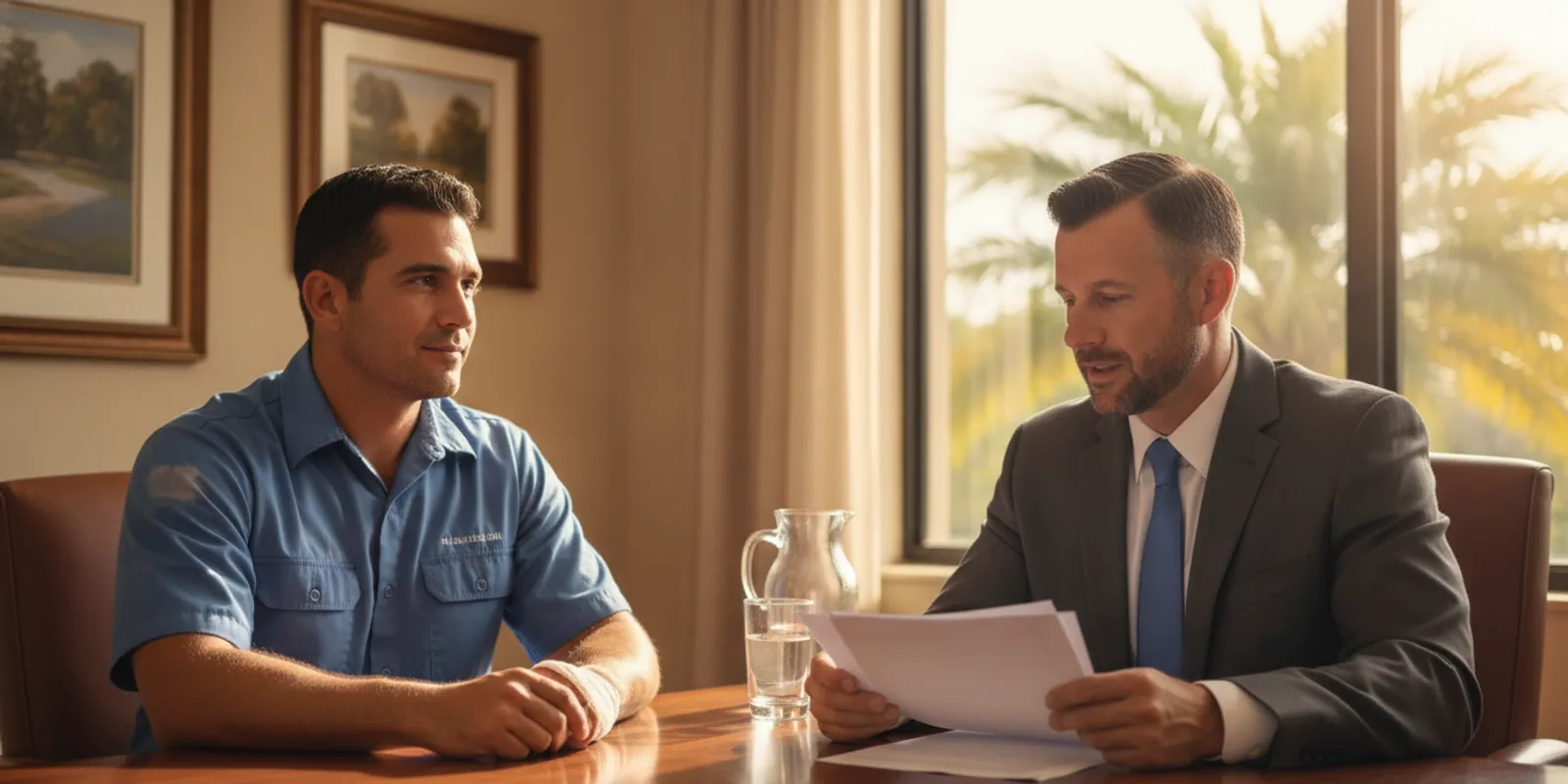
If you were hurt on a job site, you may be trying to recover while calls, paperwork, and questions pile up. Knowing when to hire a construction injury lawyer can help you make informed choices before important records disappear or you agree to something you do not understand. In general, consider getting legal guidance early when an injury is serious, responsibility is disputed, several companies may be involved, or an insurer asks you to give a recorded statement or sign a release. A lawyer can review the facts and explain possible next steps; no one can promise a particular result from a brief description.
Request a Free Case Evaluation
When should you hire a construction injury lawyer?
For a serious construction injury, it is sensible to seek legal advice as soon as practical, rather than wait until treatment ends or an insurance claim is denied. Early advice can help you understand what information to keep, which communications need care, and whether there may be more than one source of responsibility. You can ask questions without assuming you must file a lawsuit.
Some situations make a prompt review especially useful:
- You suffered a serious injury. A fracture, head or back injury, burn, amputation, or injury requiring surgery can involve extended care, missed work, and uncertain future needs. A lawyer can help you understand how those issues may affect the evaluation of a claim.
- The accident has more than one possible cause. A fall, equipment failure, falling object, electrical hazard, or vehicle incident may involve decisions by different people or businesses. The party responsible is not always obvious from the first account.
- Your employer, a contractor, or an insurer disputes what happened. Differing accounts and incomplete incident records can make it harder to preserve a clear picture of the event.
- You are being asked to sign or say something quickly. Do not sign a release or give a detailed recorded statement unless you understand what it covers and what rights you may be giving up. You can ask for time to review it and get advice.
- Your injuries affect your ability to work. Keep track of missed shifts, changes to duties, and work restrictions. If the accident raises questions about wage benefits or other coverage, legal advice may help you identify which process applies.
- A worker died or cannot manage the claim. A family may need to understand who can act and what information to gather. A lawyer can discuss the circumstances and explain options without making assumptions about who is entitled to bring a claim.
If the injury is minor and the facts are clear, you may first focus on medical care and documenting what happened. You can still ask a lawyer questions before deciding what to do. The important point is not to wait for a crisis if you already face a dispute, a deadline, or pressure to make a decision.
What can a lawyer add to a construction injury claim?
A construction site can include a property owner, general contractor, subcontractors, staffing firms, equipment suppliers, and other participants. Their roles and responsibilities vary from site to site. A lawyer can investigate the event, identify potentially relevant parties, and assess what evidence may help explain how the injury occurred. That is different from assuming that every company at a site is legally responsible.
Depending on the facts, legal work may include:
- Gathering incident reports, photographs, video, work records, safety documents, and available witness accounts.
- Looking at who controlled the area or task, what equipment was used, and what warnings or procedures applied.
- Reviewing medical records and connecting the reported injury to the treatment and limitations that followed.
- Communicating with insurers and evaluating documents before you sign or provide a statement.
- Explaining possible claim routes and the practical steps, costs, and uncertainties that may come with them.
These are investigative possibilities, not a checklist that applies identically to every case. Evidence can point in different directions, and an attorney needs the specific facts before advising on responsibility or value. A Florida construction accident lawyer guide offers additional background on getting legal help after a job-site injury.
What should you do before speaking with a lawyer?
You do not need to solve the legal issues before asking for a case review. A few practical steps can help preserve details and make the conversation more useful. Put your health first, and do not enter an unsafe area or delay needed medical attention to collect evidence.
- Get appropriate medical care. Tell the treating provider what happened and describe symptoms as accurately as you can. Follow care instructions and keep copies of visit summaries, work restrictions, and bills when available.
- Write down your account. As soon as you are able, record the date, approximate time, location, task, equipment involved, and what you remember before and after the incident. Separate what you saw from what someone else told you.
- Save available evidence. Keep photographs, messages, work schedules, incident paperwork, and names or contact details for witnesses. Do not alter files or post sensitive details publicly.
- Keep work and insurance communications. Save letters, emails, forms, and notes of calls. Record who contacted you, when, and what was requested. Ask for copies of documents you are expected to review.
- Make a short impact log. Note appointments, days missed, changes in duties, out-of-pocket expenses, and how symptoms affect ordinary activities. Keep the entries factual and dated.
- Ask before signing or giving a recorded account. If a form or call is unclear, request a copy and time to consider it. A lawyer can explain the significance of the particular request.
For more practical safety-reporting context, see the firm's guide on how to report an unsafe construction site. A safety report is not a substitute for medical care or legal advice, but a clear written account can help preserve what was observed.
How do you choose the right construction injury lawyer?
Look for a lawyer who will listen carefully, explain the process in plain language, and discuss the limits as well as the strengths of your situation. Construction claims can involve technical records and several participants, so ask how the lawyer would learn the facts and keep you informed. Avoid choosing based only on a dramatic promise or an advertised result from a different case.
A law review article examines referral networks in the plaintiffs' personal-injury bar. A referral may be one way to find a lawyer, but it cannot tell you by itself whether that attorney is a good fit for your particular case. Read the article on referral networks in the plaintiffs' personal-injury bar, then ask direct questions of any lawyer you consider.
During an initial discussion, consider asking:
- Have you handled construction injury matters with facts like these?
- What information would you want to review before assessing the case?
- Who will be my main point of contact, and how will I receive updates?
- What legal routes might apply, and what uncertainties should I understand?
- How are fees and case expenses handled? Can I review the agreement and ask questions before deciding?
- What should I avoid doing while the matter is being reviewed?
Listen for answers that address your circumstances rather than guarantee a result. You should be able to understand the proposed fee arrangement and ask about expenses in writing before signing an agreement. For a broader overview of the firm's injury practice, see its personal injury legal services.
How does a construction injury case compare with other claims?
The right next step depends on how the injury happened, which insurance or legal processes may apply, and what information is available. The table below is a general guide to questions to raise, not a legal conclusion about any specific accident.
| Situation | What may make it complex | Useful first step |
|---|---|---|
| Injury while doing assigned work | Work-related benefits and a separate claim against another responsible party may raise different questions. | Report the injury through the appropriate work channel, seek care, and ask a lawyer which processes may apply. |
| Injury involving a contractor or site condition | Control of the area, task assignments, warnings, and records may involve multiple businesses. | Preserve your account and available documents; ask who should investigate and what evidence may be time-sensitive. |
| Equipment or falling-object incident | The equipment, its condition, its use, and the actions of different participants may need review. | Keep photos and identifying details if safely available, and avoid repairing, moving, or discarding relevant items yourself. |
| Disputed account or insurer contact | Early statements and documents may be used to assess what happened and what losses are claimed. | Ask for copies, note deadlines, and get advice before signing a release or giving a recorded statement. |
What can change the timing of a construction injury case?
There is no reliable single timeline for every construction injury claim. The time needed can depend on the medical picture, how many parties or insurers are involved, whether responsibility is disputed, and how quickly key records can be gathered. A claim may be difficult to evaluate while important treatment is still ongoing, but that is not a reason to postpone asking about steps that could preserve information.
Ask a lawyer how the relevant deadlines will be identified for your circumstances. Different potential claims can have different rules, and deadlines may depend on the parties and facts. Do not rely on a general online article to calculate a filing deadline. Keep any notice or claim paperwork, and share it promptly during a legal review.
Construction sites change quickly. Work areas may be repaired, equipment may be moved, and witnesses may become difficult to locate. Prompt documentation can help, but it does not guarantee that evidence will be available or establish who is responsible. If you are unsure whether a detail matters, preserve it and ask rather than guessing.
Example: a fall and an incomplete record
Imagine a worker falls near a temporary opening. The worker remembers a missing barrier but is unsure when it was moved. A coworker saw the area earlier in the shift, and a supervisor completes an incident form with a different description. In that situation, a useful first task is not to decide who is at fault. It is to keep the worker's dated account, identify the coworker, preserve the form, note when the area was observed, and tell counsel what remains uncertain. This separates firsthand observations from later conclusions and gives an investigator a clearer starting point.
Now consider a tool-related injury where the equipment was taken out of service after the event. The worker may have photographs of the model and condition, while maintenance records or purchase records remain with a company. A lawyer can consider whether those records may matter and how they can be requested appropriately. The worker should not try to retrieve property from a restricted site or interfere with an investigation. A safe, accurate description of what was observed is more useful than speculation about a mechanical defect.
What should you expect in a first case review?
A first review is a chance to describe the incident, understand what information is missing, and decide whether you want to explore legal representation. Bring what you have, but do not delay reaching out simply because you lack a complete file. A lawyer may ask about the accident, your treatment, work duties, communications, and any forms or deadlines you know about.
It can help to prepare a brief timeline and a list of questions. Be candid about facts that may seem unfavorable, including earlier injuries, uncertainty about the sequence, or statements you have already made. Accurate details help a lawyer give a more useful preliminary assessment. The review may identify follow-up questions rather than provide a final answer on liability or compensation.
There is no obligation to accept advice you do not understand. Ask for an explanation of the fee agreement, expected costs, communication practices, and next steps before making a decision. If you speak with more than one attorney, compare the clarity and care of the answers, not just the confidence of the presentation.
How to prepare a concise timeline
Start with the date and approximate time, then list events in order: assigned task, location, equipment or materials involved, what happened, who was present, and what you did immediately afterward. Mark uncertain details as uncertain. For example, write “around 2 p.m., based on my break time” rather than converting an estimate into an exact time. If a coworker later told you something, label it as information from that person and record when you heard it.
Keep separate folders for medical documents, work records, and messages. A simple index can note the date, sender, and subject of each item. If you receive a new form, save the full document and envelope or email that came with it. This organization makes it easier to answer questions without relying on memory, and it can reveal gaps to follow up on.
What an initial review can and cannot tell you
A short conversation can help identify possible issues and next steps, but a preliminary discussion may not settle questions about responsibility, damages, coverage, or the best process. The lawyer may need more records, time to speak with witnesses, or a clearer medical picture. Ask what additional information would be useful and whether you should take any immediate step while the review continues.
It is reasonable to ask who will handle follow-up, how to send records securely, and when you should expect an update. If you are comparing firms, use the same basic questions with each one. Compare how clearly the attorney explains uncertainties, whether the proposed scope is understandable, and whether you feel comfortable sharing relevant details.
Keep a written note of the advice you receive and any action items. If an instruction is unclear, ask for clarification rather than relying on memory. Do not treat a first conversation as a substitute for reading an agreement before signing it. Careful communication at the start can help both sides understand what is being reviewed and what remains unresolved.
Request a Free Case Evaluation
Frequently Asked Questions
Is it too early to call a construction injury lawyer?
Usually, asking questions early is reasonable, especially after a serious injury, a disputed incident, or contact from an insurer. An initial discussion can help identify what to preserve and what additional facts are needed. You do not have to decide immediately to hire a lawyer.
Do I need to know who caused the accident before I call?
No. Identifying potentially responsible parties may require reviewing site records, roles, and the circumstances of the incident. Share what you know and make clear what you do not know; do not guess about responsibility.
Should I speak with an insurance adjuster first?
You can ask who the adjuster represents and request that questions or documents be provided in writing. Before giving a recorded statement or signing a release, make sure you understand the request and its possible effect. A lawyer can review the specific situation with you.
What if I am not sure whether I have a case?
You do not need to decide that on your own. A lawyer can ask about the facts, explain what remains uncertain, and tell you whether more information is needed before assessing possible claims. An initial review is not a promise that a case will succeed.
Choose a careful next step
After a construction injury, focus on medical care, keep a factual record, and take time to understand documents before signing them. If the injury is serious or the situation is disputed, a timely conversation with a construction injury lawyer can help you identify questions and protect your ability to make an informed choice.