
Drunk Driving Accident Lawyer Florida: DUI Crash Victims
Learn how Florida DUI crash victims may pursue compensation, what dram shop rules allow, which evidence matters, and how criminal and civil cases differ.
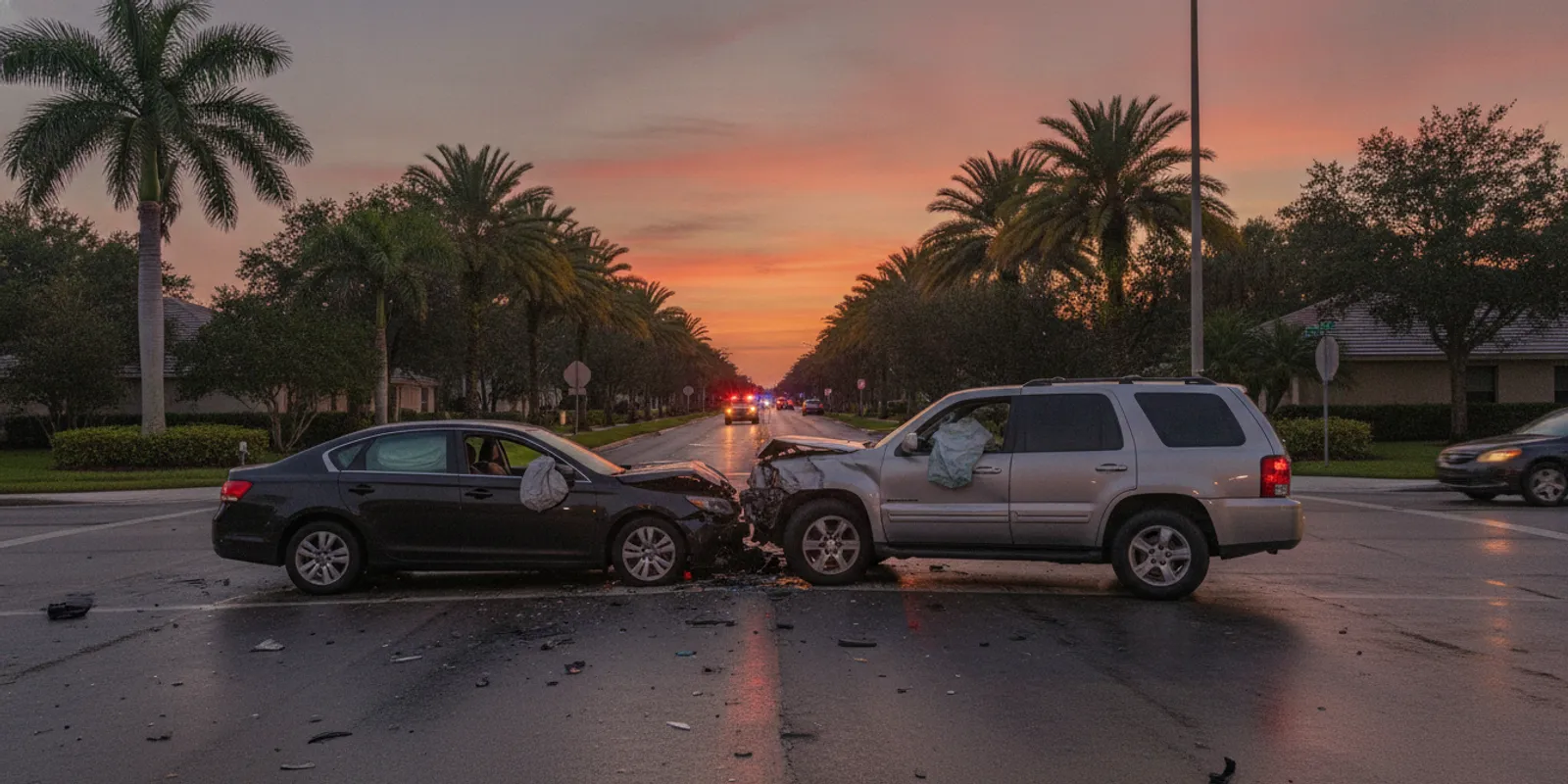
If an impaired driver caused your crash, you may be coping with injuries, missed work, vehicle damage, and uncertainty about what comes next. A drunk driving accident lawyer Florida residents contact can help explain how a civil injury claim works, what evidence may matter, and which parties may be responsible. For a broader overview of injury claims, see the firm’s Florida personal injury information.
Request a Free Case Evaluation
Can You Sue a Drunk Driver for Your Injuries in Florida?
Often, a person injured by an impaired driver can pursue a civil claim if the driver’s conduct caused the crash and resulting harm. A criminal DUI case and a civil injury claim are separate proceedings. The criminal case is brought by the government. A civil case is brought by an injured person or, in some situations, a representative of someone who died.
For a civil claim, the central questions are usually whether the other driver failed to use reasonable care, whether that failure caused the collision, and what losses followed. Evidence that a driver was impaired may be important, but a claim still needs proof connecting the driver’s conduct to the crash and your injuries. The driver may dispute fault, the cause or extent of an injury, or the value of losses.
Florida uses a modified comparative negligence rule. In general, if an injured person is found more than 50 percent responsible for their own harm, recovery may be barred; if the person is 50 percent or less responsible, compensation may be reduced by their share of fault. How that rule applies depends on the facts and the type of claim. Do not assume that a disagreement about fault means you have no options.
Florida’s no-fault auto insurance system also affects many motor vehicle injury claims. Your own Personal Injury Protection (PIP) coverage may be a first source of benefits for covered medical expenses and lost income, subject to policy terms and legal requirements. A claim against another driver may be possible when the injury meets the applicable legal threshold. This interaction can be confusing, so learn more about the firm’s Florida auto accident claims and get advice based on your particular situation.
Some cases involve more than one potentially responsible party, but the existence of several possible defendants does not mean each one is legally at fault. Liability must be supported by evidence and the rules that apply to that person or business. A lawyer can help identify what information is missing and whether it can be requested through an appropriate process.
The details matter: the crash location, insurance policies, medical records, statements, and any available impairment evidence all may affect the case. A drunk driving accident lawyer Florida victims consult can review those details and explain possible next steps. The firm’s broader personal injury practice information also describes the types of injury matters it handles.
What Are Dram Shop Laws and Do They Apply in Florida?
“Dram shop” laws address when a business or person that provides alcohol may be held responsible for harm caused by someone who drank there. Florida’s law is limited. In general, it can impose liability when alcohol is willfully and unlawfully sold or furnished to a person under 21, or when alcohol is knowingly served to a person habitually addicted to alcohol. Ordinary service to an adult who later drives impaired does not, by itself, automatically establish liability under Florida’s statute.
This distinction is important. People sometimes assume that a bar, restaurant, host, or other alcohol provider is liable whenever an intoxicated driver causes a crash. That is not a safe assumption. Whether a provider may be responsible depends on the specific statutory conditions and evidence. A possible claim may also involve separate legal theories, but those questions require careful review rather than guesswork.
Alcohol-provider claims often turn on details that are different from the evidence used to show how the vehicles collided. A witness may know who served a drink but not how the crash happened; a crash report may document the collision but say nothing about service. Keeping these questions separate can help avoid assumptions and focus the investigation on the facts each legal issue requires.
Useful information might include receipts, payment records, witness accounts, video footage, the driver’s age, and evidence about what the provider knew. Some of that evidence may be held by a business and could be overwritten or discarded as time passes. If you believe a provider played a role, tell your attorney promptly so appropriate preservation steps can be considered.
There can also be complications when the alcohol was provided at a private gathering. The same careful approach applies: who supplied it, the recipient’s age, what the provider knew, and how the crash happened may matter. Do not confront a provider or try to obtain restricted records yourself. Keep what you already have and share it with a lawyer.
What Damages Can You Recover After a DUI Accident?
Depending on the evidence, injury severity, available insurance, and applicable law, a civil claim may seek compensation for losses caused by the crash. Potential categories can include medical care, lost earnings, reduced ability to earn income, pain and suffering, and damage to personal property. The available categories and proof requirements vary. No particular amount or result can be promised based on the fact that a driver was charged with DUI.
Keep in mind that insurance coverage and the source of a loss affect how a claim is evaluated. PIP, liability coverage, health insurance, and other policies may have different rules. An injured person may need to document both out-of-pocket costs and losses that have not yet fully developed, such as ongoing treatment needs. Do not sign a release or accept a final settlement before you understand what claims it resolves.
| Potential loss or claim issue | Examples of useful documentation | What to keep in mind |
|---|---|---|
| Medical expenses | Visit summaries, bills, prescriptions, referrals, and treatment records | Seek appropriate care and follow providers’ instructions. Coverage rules and recoverable amounts depend on the circumstances. |
| Lost income or earning ability | Employer letters, schedules, pay records, tax documents, and work restrictions | Record time missed and changes in duties or hours. Longer-term effects may need additional support. |
| Pain and effects on daily life | Treatment notes and a dated personal record of symptoms and limitations | Describe specific changes honestly, such as difficulty driving, sleeping, or completing ordinary tasks. |
| Vehicle or property damage | Photos, repair estimates, invoices, and insurer correspondence | Keep records of repair costs and related transportation expenses; coverage terms may differ. |
| Possible alcohol-provider responsibility | Witness names, receipts, messages, and information about a provider’s conduct | Florida’s dram shop statute is limited; the evidence must fit the applicable legal requirements. |
This table is a recordkeeping aid, not a list of guaranteed recoveries. Keep copies of documents and note when and how you received them. If you are unsure whether an expense or record matters, preserve it and ask before discarding it.
In fatal crashes, Florida law may allow certain surviving family members or a personal representative to pursue a wrongful death claim. Who may bring the claim and which losses may be sought are governed by specific rules. Families should avoid relying on general online descriptions to determine their rights. For related information, review the firm’s Florida wrongful death information.
Criminal vs. Civil Cases: How a DUI Crash Becomes a Lawsuit
A DUI arrest or charge may provide relevant information, but it does not decide a civil injury claim. Criminal proceedings address alleged violations of criminal law. The state must prove its case under the criminal standard, and the possible outcomes include dismissal, a plea, or a trial verdict. A civil case addresses responsibility for the injured person’s losses and uses a different standard of proof.
The proceedings may move on separate schedules. An injured person generally does not need to wait for a criminal case to finish before learning about civil options. At the same time, statements or evidence in one proceeding may have consequences elsewhere. Avoid discussing fault publicly or posting details about the crash on social media. Direct requests for statements to your lawyer or insurer as appropriate, and be truthful in all communications.
National data underscores why impaired driving crashes are treated seriously: the National Highway Traffic Safety Administration reports that 11,904 people died in alcohol-impaired driving crashes in 2024, or about one death every 44 minutes. See NHTSA’s drunk driving statistics and resources. A 2025 UC Berkeley SafeTREC factsheet also reported that someone died in an alcohol-impaired crash about every 42 minutes in 2023; see its alcohol-impaired driving factsheet. These national figures do not predict what happened in an individual crash or establish liability in a particular case.
A civil claim may be resolved through negotiation or, if needed, litigation. Evidence may include a crash report, photographs, physical evidence, medical records, witness testimony, and records from the criminal investigation when they can be obtained lawfully. An insurer may also investigate the event. For a separate discussion of legal representation in vehicle claims, see how a car accident lawyer may help with a claim.
How to Protect Your Claim After a Drunk Driving Accident
Your health comes first. Call emergency services if anyone may be hurt or is in immediate danger. Get medical attention as soon as you can, even if symptoms seem manageable at first. Some injuries become more noticeable later, and prompt evaluation creates a record of your condition and care. Follow the treatment plan and tell providers about new or changing symptoms.
- Report the crash and cooperate with responders. Give accurate information. Ask how to obtain the incident or crash report, but do not guess about facts you did not observe.
- Save what you can safely document. Take photographs of the vehicles, roadway, visible injuries, and relevant conditions if it is safe to do so. Write down the date, time, location, witness names, and what you remember.
- Keep records together. Save medical paperwork, bills, prescriptions, repair estimates, insurer letters, and proof of missed work. Maintain a simple dated log of symptoms and the ways they affect daily activities.
- Be careful with insurance statements. Notify your insurer as required by your policy. You can ask who is calling and what information is requested. Do not speculate, minimize an injury, or agree to a recorded interview or release without understanding its purpose.
- Avoid public commentary. Do not post crash details, speculate about fault, or share images of injuries online. Preserve relevant messages and photographs instead of editing or deleting them.
- Act promptly to learn about deadlines. Filing periods and notice requirements can depend on the parties and facts. Evidence may also become harder to locate. Ask a lawyer to identify any deadlines that apply rather than assuming a general time limit.
These steps help preserve information; they do not replace legal advice. A crash report may contain errors or incomplete accounts, so review it and note anything you believe is inaccurate. Do not alter an official document. A lawyer can advise whether and how to supplement the record.
If you need general answers before deciding what to do, the firm’s injury and disability FAQs may be a helpful starting point. The firm also lists its Southwest Florida service areas for people checking whether it serves their location.
Why DUI Accident Cases Require an Experienced Attorney
Impairment can make a crash claim more complicated, not automatic. An attorney can help evaluate how the available evidence relates to fault, causation, the extent of injury, insurance, and damages. If alcohol was provided by someone other than the driver, the lawyer can assess whether the limited requirements for a Florida dram shop claim may be supported.
Legal help can also make it easier to organize the investigation while you focus on treatment. That may involve identifying witnesses, requesting records, reviewing insurance communications, documenting losses, and explaining the difference between a criminal case and a civil claim. No lawyer can guarantee a particular outcome, and the strength of a claim depends on its facts and proof.
Kushner & Kushner describes its approach as combining compassionate guidance with zealous advocacy. If you want to discuss an injury claim, you can contact the firm to learn about the next step. An evaluation can help clarify what information is still needed and whether the firm may be able to assist.
Request a Free Case Evaluation
Frequently Asked Questions
Does a DUI conviction prove the driver is liable for my injuries?
A conviction may be relevant evidence, but it does not by itself establish every part of a civil claim or determine the value of losses. The injured person still needs to show the required connection between the conduct, the crash, and the harm. The effect of criminal case records depends on the facts and applicable rules.
Can I sue a bar that served the driver?
Possibly, but Florida dram shop liability is limited. The statute generally addresses unlawful service to a person under 21 or knowingly serving a person habitually addicted to alcohol. Simply alleging that an adult was served too much alcohol is not necessarily enough. Evidence and the precise circumstances matter.
What if I may have contributed to the crash?
Do not assume that you cannot pursue a claim. Florida’s comparative fault rules may reduce or bar recovery depending on the percentage of fault assigned and the applicable law. An attorney can review the evidence and explain how the rule may apply.
How long do I have to bring a claim?
Deadlines vary with the type of claim and the parties involved, and special notice rules may apply in some situations. Because missing a deadline can affect your rights, get advice promptly instead of relying on a general online deadline.
What should I bring to an initial case evaluation?
If available, bring the crash or incident report, photographs, insurance information, medical records or bills, correspondence, and a list of witnesses. You do not need to delay asking questions just because you are still gathering documents.
Get Clear Guidance After a Florida DUI Crash
A serious crash can leave you with immediate decisions and questions that take time to answer. Preserve the records you have, prioritize medical care, and get advice tailored to the crash and your losses. This article is general information, not legal advice, and it does not create an attorney-client relationship.